Dental autoclave repair, without stopping the schedule
A dental office runs its sterilizer all day, and a dental autoclave that faults at 10 a.m. puts every chair behind by lunch. We do dental sterilizer repair on the bench, with a courier pickup anywhere in our Southern California area and a tested loaner swapped in on the same stop.
Models we see: Midmark M11 and M9 (and older Ritter UltraClaves), SciCan Statim 2000 and 5000 cassette units, SciCan Bravo G4, Tuttnauer EZ9, EZ10, 2340M, 2540M and T-Edge.
What a dental office actually needs from a repair
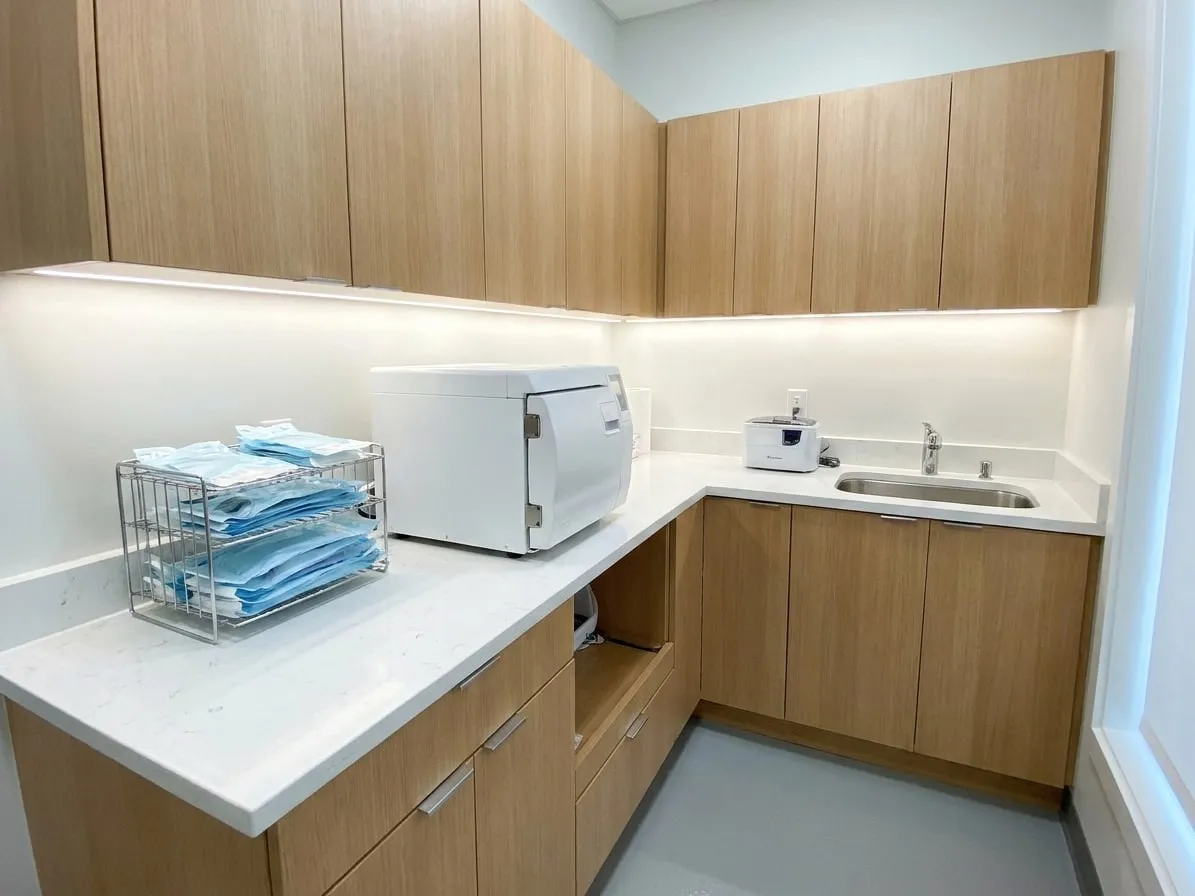
Most offices do not have a spare sterilizer. When the only autoclave goes down, the morning's instruments are still in pouches and the afternoon's are still dirty. The repair itself matters less than how long the office runs without sterilizing. That is why we lead with the loaner: the courier brings a tested unit, takes yours, and you load the next cycle before the driver leaves. $149–$199 for up to 21 days, $199 for a Statim-class unit, free on repairs over $900.
The second thing that matters is the paperwork. California's Dental Board requires a weekly biological indicator on each sterilizer, with results kept for 12 months (16 CCR §1005). After a repair, CDC guidance asks for more before routine use. We hand back a record of what was replaced and the logged bench cycles, so the entry in your sterilizer log has something behind it. More in spore testing in California.
What it does, what failed, what it costs
| Symptom | Usual cause | What we do | Price |
|---|---|---|---|
| M9 or M11 aborts with a C5 or 0746 temperature code | Unit not level, steam leak, heater, temperature or water-level sensor | Code history read, cause traced on the bench, full cycles logged | from $249 |
| Steam or water at the door, or a whistle | Door gasket past its yearly change, or a dam gasket | Gasket kit replaced, door adjusted, seal proved on a full cycle | from $249 |
| Statim cycle fault 3 or 4, cassette will not pressurize | Cassette seal past 500 cycles, warped cassette, check valve or PRV leak | Seal and cassette checked, leaking valve replaced, calibration checked | from $249 |
| Statim cycle fault 1, 16 or 25 — overheat or no heat | Pump delivery, blocked pump filters, blown thermal fuse, contaminated steam generator | Pump side fixed first, then fuse or generator, cycles logged | from $449 |
| Bravo or T-Edge B fails the vacuum test or Bowie-Dick | Air leaking past the door gasket, vacuum pump, hydraulic circuit | Leak or pump found and fixed, vacuum test and Bowie-Dick run on the bench | from $499 |
| Instruments wet or spotted after the cycle | Clogged filters, overloading, wrong water, drying fault | Filters and drain path cleaned, water checked, drying cycle verified | from $349 |
| Positive spore test with no error on the unit | Leak, sensor drift or load problem the controller does not catch | Temperature and pressure checked against reference, leaks sealed, cycles logged | from $125 diagnostic |
Prices are "from", with labor, ordinary parts and a test cycle. The final price comes after the bench diagnostic, and nothing is done until you approve it. All prices →
The units dentists run, and how they fail
Midmark M9 and M11. The workhorse chamber units in a lot of operatories. They are gravity units, not Class B, so they use biological indicators made for gravity steam sterilizers and do not need a Bowie-Dick test. The repairs they need: door and dam gaskets (Midmark lists the gasket kit as a yearly change), fill and vent valves, temperature faults from an unlevel unit or a leak, and heater-side leaks that trip the GFI. Three code families exist depending on the generation — see Midmark error codes.
SciCan Statim. Cassette units, often run next to a chamber unit for fast turnaround on unwrapped items such as handpieces. Statim faults trace back to the cassette seal (every 500 cycles or 6 months), the pump and its filters, solenoid valves and the steam generator. A busy office hits 500 cycles long before six months. See the Statim page.
SciCan Bravo and Tuttnauer T-Edge B. Class B pre-vacuum units. They add a vacuum pump, and with it a daily Bowie-Dick test before the first load. Failed vacuum tests usually mean air leaking past the door gasket or a tired pump. Bravo also locks itself after five cycles on bad water, so water quality is a repair topic, not just a maintenance one. See the Bowie-Dick guide.
Tuttnauer EZ and manual units. EZ9, EZ10 and the 2340M and 2540M show up in dental offices too; LOW WATER and LOW HEAT are the messages to know first. Every brand's manual makes the same point about water: distilled, low conductivity, or the chamber and valves scale up.
Related
Spore testing in California
How often, what to log and what to do after a repair.
Midmark M11
The 11-inch UltraClave: gaskets, heaters, valves, boards.
SciCan Statim
Statim 2000 and 5000 cassette autoclaves, G4 included.
SciCan Bravo
Bravo G4 Class B vacuum autoclaves.
Loaner autoclaves
A tested loaner swapped in on the same stop, so you never stop sterilizing.
Bowie-Dick test
What it proves, which autoclaves need it and which do not.
What the price includes
- Pickup and return anywhere in our Southern California area, the bench diagnostic and a written quote — $125, credited toward the repair.
- After the repair: full cycles on the bench with a temperature and pressure check, the printout or log kept for your records.
- A loaner on the same stop if you need one — from $149, free on repairs over $900.
- 90-day warranty on repairs, 1 year on overhauls.
Questions
How often does a California dental office have to spore test?
At least weekly. Under 16 CCR §1005(b)(17) sterilization cycles must be verified with a biological indicator at least once a week, the results documented and kept for 12 months. CDC adds mechanical monitoring of every load, a chemical indicator in every package and a biological indicator with every implant load.
What happens if our spore test comes back positive?
CDC says to take the sterilizer out of service and retest right away. If the second test is also positive, the unit is inspected or repaired and needs three consecutive negative biological indicators in fully loaded cycles before it goes back into use. Items processed since the last negative test are reprocessed, and implants recalled. A loaner keeps the operatories running while that happens.
Do we need a spore test after you repair it?
CDC guidance after a major repair is a biological and chemical indicator in three consecutive empty-chamber cycles before routine use, plus three Bowie-Dick tests on a pre-vacuum unit like the Bravo or T-Edge B. We run full logged cycles on the bench and hand back the printout; the biological testing on your counter is still your record.
How long will our unit be gone?
3 to 5 business days on the bench, parts permitting — and if a part has to be ordered, we tell you how long. With a loaner swapped in on the pickup, the schedule does not have to change.
Do you work on the unit at our office?
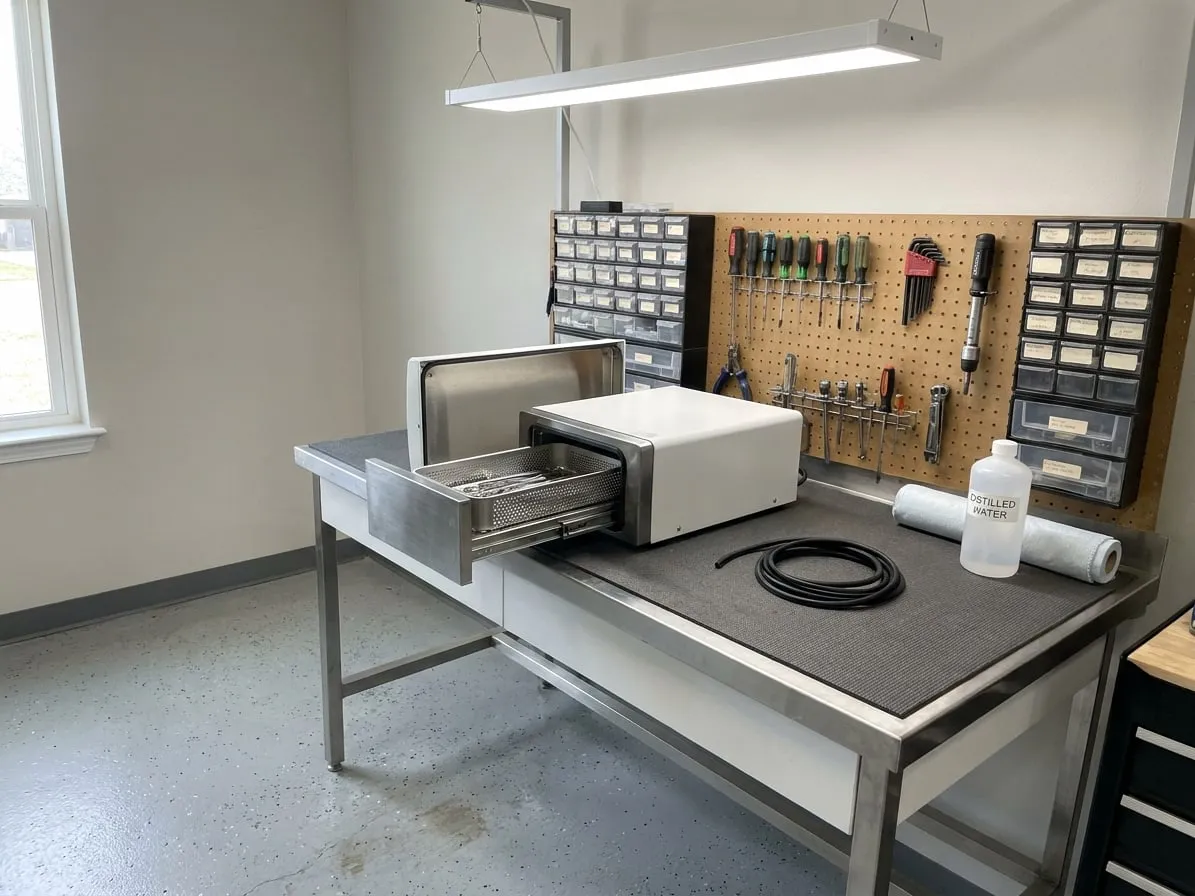
No. We pick the unit up, repair it on the bench in our West Hollywood workshop and bring it back. That is where the test equipment is, and it is why a loaner comes on the same stop.
Sources
- 16 CCR §1005 — California Dental Board infection control (weekly biological indicator, 12-month records)
- CDC — sterilization monitoring in dental settings
- CDC — sterilizing practices (testing after major repair)
- Midmark M9/M11 maintenance (gasket kit yearly)
- SciCan Statim 5000 / 5000S / G4 service manual
- SciCan Bravo G4 operator manual
Book a pickup
Tell us the model, the error on the screen and what it does. A technician reads it and texts you back with a price range and the next pickup day in your area.
- Pickup, bench diagnostic and return — $125, credited toward the repair
- A tested loaner swapped in on the same stop, from $149 — free on repairs over $900
- A written quote before any work starts
- Typical bench time: 3 to 5 business days on the bench, parts permitting
Rather talk? Call or text (424) 622-8416.