Autoclave not heating or never reaching temperature
An autoclave not heating shows up in a few ways: the chamber stays cold, it takes far too long to warm up, or the cycle aborts with a low-heat, low-temperature or low-pressure fault. The element is only one suspect. We test the whole heating path on the bench and fix the cause, not just the part that burned.
Models we see: Midmark M11, M9 and older Ritter units; Tuttnauer 2340M, 2540M, EZ9, EZ10, EZ9Plus, EZ11Plus and 3870; SciCan Statim 2000 and 5000 steam generators; SciCan Bravo.
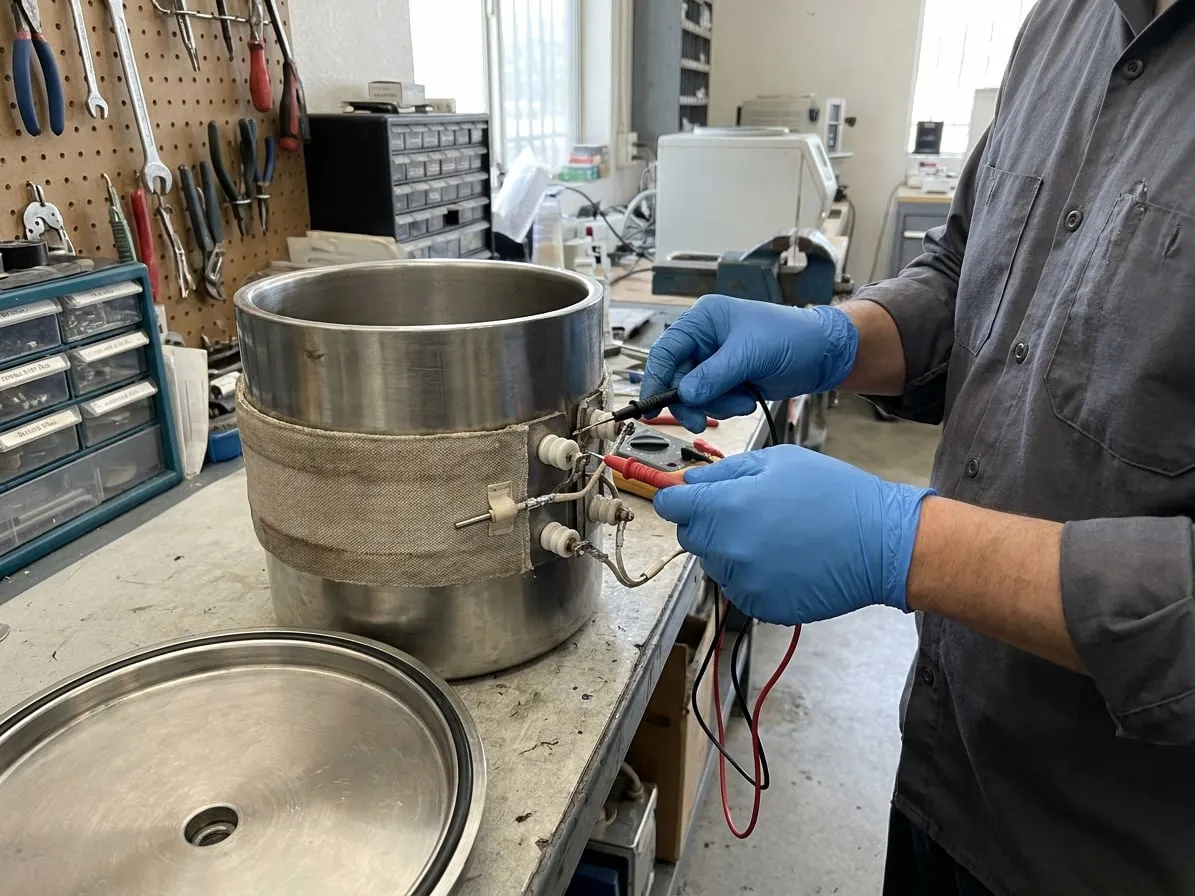
Why a tabletop autoclave stops heating
Every one of these units does the same job: put enough heat into a small amount of water to make steam, and hold the chamber at temperature and pressure for the set time. The controller only knows two things — what the temperature sensor reads and how long it has been trying. If the number does not climb fast enough, it gives up and shows a fault. That is why one message covers a burned-out element, a steam leak and a sensor that reads low.
Things to rule out yourself, with the unit unplugged and cold:
- Is it level? Midmark lists an unlevel unit as a cause of its temperature faults, and Tuttnauer lists it for LOW WATER. The water has to sit where the sensor and the heater expect it.
- Is there water, and is it the right water? Distilled water to the fill line. Wrong water scales the chamber and the Statim steam generator, which slows heating. See what water to use.
- Is it on its own circuit? The M9 and M11 draw about 1425 W and Midmark recommends a dedicated 15 A circuit. Tuttnauer lists low line voltage as a LOW HEAT cause. A shared power strip will do it.
- Is the door gasket sealing? A leak lets steam out faster than the heater makes it. If you see steam or water at the door, start with the gasket.
If those are fine and the fault comes back after a power cycle, the problem is inside the unit. Stop running cycles — repeated overheat trips wear the parts that protect the heater.
What it does, what failed, what it costs
| Symptom | Usual cause | What we do | Price |
|---|---|---|---|
| Display lights up, chamber stays cold, cycle times out | Open heating element, or no power reaching it (relay, solid-state relay, wiring or board) | Element resistance and supply measured, element or relay replaced, full cycle logged | from $449 |
| Unit heated before, now trips a high-limit or overheat fault and stops heating | High-limit thermostat or thermal fuse opened — usually because the chamber or generator ran short of water | Cause of the overheat found first (fill, level, leak), then thermostat or fuse replaced | from $449 |
| Slow to heat, aborts with low temperature or low pressure | Steam escaping past the door gasket, a valve or a fitting, so the chamber never builds pressure | Leak traced and sealed, gasket or valve replaced, temperature and pressure logged | from $249 |
| Reaches temperature on one cycle, low-temperature fault on the next | Drifting or dirty temperature sensor, or a water-level sensor reading wrong | Sensors checked against a reference, cleaned or replaced, calibration checked | from $449 |
| Statim never reaches 95 °C, or faults within the first minutes | Blown thermal fuse, failed steam generator triac, contaminated steam generator or poor pump delivery | Pump delivery and generator checked before the fuse is replaced, so it does not blow again | from $449 |
| GFI outlet trips when the unit starts heating | Leaking heater gasket or a failing element (Midmark); leaking check valve (Statim) | Leak and insulation checked, gasket, element or check valve replaced, electrical safety test | from $449 |
| Controller shows nonsense readings or will not start the heat phase | Control board, temperature adapter or connector fault | Board diagnosed on the bench; repaired where possible, replaced where not | from $449 |
Prices are "from", with labor, ordinary parts and a test cycle. The final price comes after the bench diagnostic, and nothing is done until you approve it. All prices →
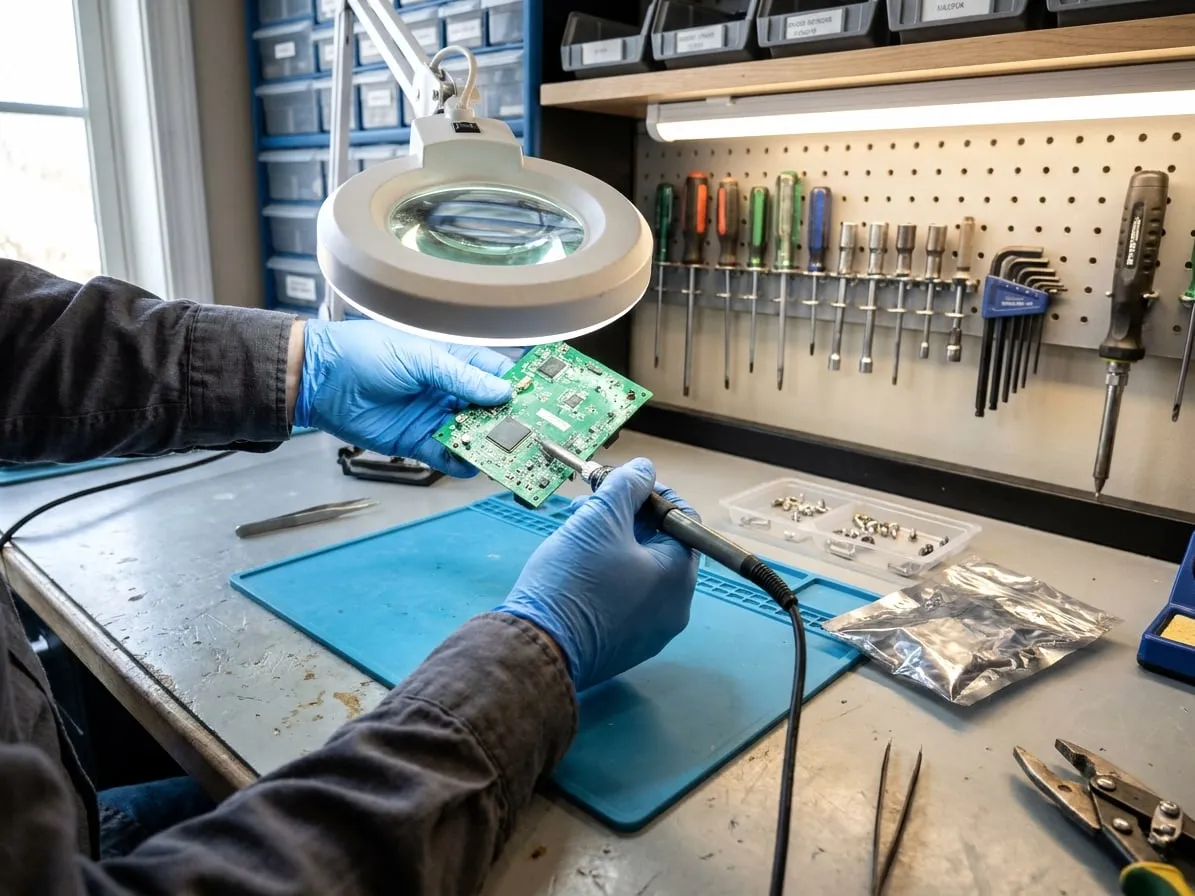
What the fault looks like, by brand
Midmark M9 and M11. On 2003-era units the C5 codes are temperature faults (C53x low, C54x high) and C98x means the high-limit thermostat opened. Midmark's list of causes for C500 faults: unit not level, failed heater, steam leaks, failed temperature sensor, a shorted water-level sensor (tray rack in backwards, or the sensor dirty or wet) and a failed pressure transducer. On the new -05x units, 0746-033C is a low-temperature error during heating; Midmark gives a heater resistance range of 34–42 Ω for 230 V units for that check, and the older quick reference lists about 10 Ω at 115 V. 074A-08xC is the high-limit thermostat — let it cool 30 minutes before anyone tests it. Older red-display units show E001 when the overheat thermostat cuts power. Full list: Midmark error codes.
Tuttnauer. The E-series and EZ9/EZ10 show LOW HEAT when sterilizing temperature is not reached in 50 minutes (80 for liquids). The usual causes are failed elements, no power to the elements, low line voltage, a safety thermostat opening early on older controllers, or a clogged air jet. LOW TEMP and LOW PRES during the cycle point to low water, elements not cycling, a solid-state relay or a weak element. On the EZ9Plus and EZ11Plus look for Low Temp, Low Pressure and Heat Time Error; the manual names overload and a leaking door gasket among the causes. See Tuttnauer error messages.
SciCan Statim. The Statim does not heat a chamber; a steam generator injects steam into the cassette. Cycle fault 1 means the cassette did not reach 95 °C in time — a big cassette leak, an overload, poor pump delivery, blown thermal fuses, a contaminated steam generator or a failed generator triac. CF25 (no pump request within 90 seconds) also points to a blown thermal fuse. SciCan's own note matters here: the fuse blows because the boiler overheated, and the overheat usually comes from poor water delivery. Replacing the fuse without fixing the pump side just blows the next one. Codes: Statim cycle faults.
SciCan Bravo. The Bravo G4 protects its chamber heater with a manual-reset safety thermostat, and its manual repeatedly lists the steam generator safety thermostat tripping among the causes of time-out alarms. A trip is a symptom; the job is finding out what made it trip.
Need to keep sterilizing while it is on the bench? A tested loaner comes on the pickup — $149–$199 for up to 21 days, free on repairs over $900.
Related
Midmark error codes
How to read a Midmark C-code, plus E-codes and the new-style codes.
Tuttnauer error messages
LOW WATER, LOW HEAT, HI TEMP and the rest, explained.
Statim cycle faults
Every Statim cycle fault number and what it points to.
Autoclave leaking water
Water under the unit, at the door or from the drain.
What water to use
Distilled water, conductivity limits and what tap water does.
Prices
Flat prices for the common repairs, pickup and test cycle included.
What the price includes
- Pickup and return anywhere in our Southern California area, the bench diagnostic and a written quote — $125, credited toward the repair.
- After the repair: full cycles on the bench with a temperature and pressure check, the printout or log kept for your records.
- A loaner on the same stop if you need one — from $149, free on repairs over $900.
- 90-day warranty on repairs, 1 year on overhauls.
Questions
Is it always the heating element?
No. The element is one of the more common causes, but a low-heat fault just means the chamber did not get hot enough in the time allowed. A steam leak, a unit that is not level, a dirty water-level sensor or low line voltage all produce the same message. We measure the element before we replace it.
What can we check before calling?
Unplug the unit and let it cool first. Then check that it sits level, that the reservoir has distilled water to the right line, that it is on its own outlet rather than a shared power strip, and that the door gasket is clean and not torn. Power-cycle once. If the same fault comes back, stop running cycles and book a diagnostic.
Can a heater fault damage the unit if we keep running it?
It can. Repeated overheat trips usually mean the chamber or steam generator is running short of water. On a Statim, SciCan says a blown thermal fuse is a symptom of a boiler overheat and the cause is often poor water delivery. Running it again and again stresses the generator and the fuses.
What does it cost?
A heating element repair starts from $449 with the part, labor and a test cycle. A board fault starts from $449. Pickup and the bench diagnostic are $125, credited toward the repair.
Do we need to spore test after the repair?
After a repair to the heating system, CDC guidance is to confirm the sterilizer works before routine use. We run full logged cycles on the bench, and we recommend a spore test on your first load back. Tattoo studios in California must spore test after a major repair.
Sources
- Midmark Quick Reference 004-0390-00 — trouble shooting chart, heater specs
- Midmark M9/M11 (-05x) error codes, SmartM9M11-SR-00020
- Midmark M9/M11 non-coded troubleshooting, SmartM9M11-SR-00019
- Tuttnauer E-series and EZ display messages (Allclave Parts)
- Tuttnauer EZ9Plus / EZ11Plus operator manual, Rev V
- SciCan Statim 5000 / 5000S / G4 service manual, cycle fault chart
- SciCan Bravo G4 operator manual
Book a pickup
Tell us the model, the error on the screen and what it does. A technician reads it and texts you back with a price range and the next pickup day in your area.
- Pickup, bench diagnostic and return — $125, credited toward the repair
- A tested loaner swapped in on the same stop, from $149 — free on repairs over $900
- A written quote before any work starts
- Typical bench time: 3 to 5 business days on the bench, parts permitting
Rather talk? Call or text (424) 622-8416.